Monthly Rent Invoice Template: Graphics & Print Templates
As a graphic designer who’s built brand identities for boutique landlords, co-living startups, and small-property management firms, I recently evaluated the Monthly Rent Invoice Template for a real client project: a locally rooted, eco-conscious rental collective launching its first branded tenant onboarding suite. My goal wasn’t just to find *an* invoice — it was to find one that reinforced trust, clarity, and quiet professionalism without sacrificing warmth or visual cohesion.
First Impression: Clean, Grounded, and Purposefully Unfussy
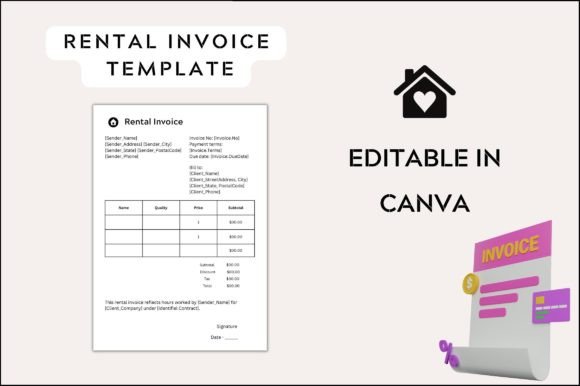
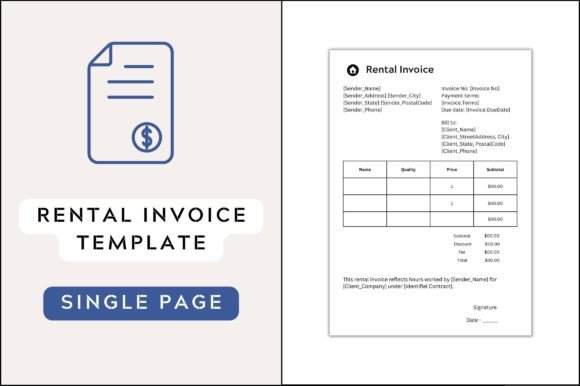
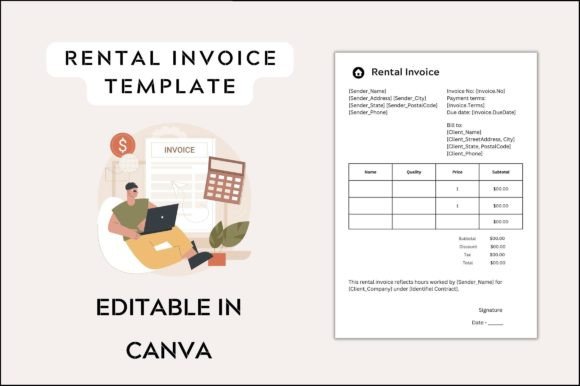
The Monthly Rent Invoice Template lands with a calm, structured confidence. It avoids decorative clutter — no excessive borders, no forced vintage textures or distracting watermarks. Instead, it leans into generous white space, balanced typography hierarchy, and clear section dividers. Visually, it reads as modern design with a subtle handmade business sensibility: precise enough for commercial use, but warm enough to feel human-centered. That duality makes it ideal for small business branding where credibility and approachability must coexist.
Where It Shines in Real Client Work
In practice, this Monthly Rent Invoice Template functions far beyond billing. As part of a broader printable design system, it anchors consistency across touchpoints:
- Brand identity: Its clean layout pairs seamlessly with minimalist logos and neutral color palettes — especially when extended into lease summaries, maintenance request forms, or welcome packets.
- Packaging design and product mockups: Used as a background layer or overlay in Canva templates, it adds instant legitimacy to digital listings (e.g., “What’s Included” visuals for an Airbnb-style platform).
- Social media graphics: Extracted sections — like the payment summary box or due date banner — translate well into Instagram carousels explaining rent policies or seasonal fee updates.
- Cricut projects and sticker design: When isolated as vector elements (if SVG is included), key components scale cleanly for tenant-facing fridge magnets or office signage.
- Editorial design and blog visuals: Repurposed as styled quote cards (“On-time payments help us maintain your home”) — it lends authority without sounding corporate.
Natural Fit for Specific Creative Contexts
This Monthly Rent Invoice Template excels in large layout areas — think full-page PDF handouts, printed welcome folders, or wall-mounted leasing office displays. It also works beautifully as a supporting brand element within themed collections (e.g., “Move-In Kit” printable bundles on Etsy) or campaign visuals tied to renter education or financial wellness.
For print-on-demand sellers and digital product creators, its editable nature means easy customization for niche audiences: student housing co-ops, artist live-work spaces, or short-term rental hosts needing bilingual versions. As a digital product, it slots neatly into design bundles focused on small business operations — especially when paired with matching lease agreements or inspection checklists.
Where Caution Is Needed
This isn’t a one-size-fits-all graphic design asset. Use it carefully in:
- Small sizes: Fine print fields or narrow column layouts may compromise readability — test at 75% scale before finalizing.
- Crowded or complex backgrounds: Its clean aesthetic relies on contrast; avoid layering over busy patterns or low-contrast gradients.
- Minimalist corporate branding: If your client’s visual language demands ultra-refined Swiss typography or monochrome austerity, this template’s gentle structure may read as *too* accommodating — not starkly authoritative.
- Professional legal or financial services: While trustworthy, it lacks the rigid formality expected in large-property-management contracts or institutional finance reporting.
Design Performance: Hierarchy, Trust, and Emotional Tone
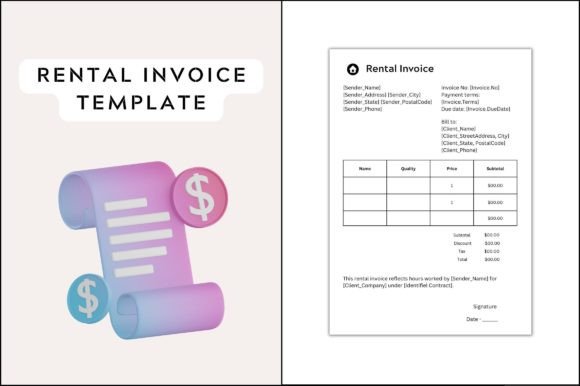
Readability is strong — thanks to logical field grouping and ample line height. Visual hierarchy guides the eye from tenant info → property details → charges → totals → payment instructions, supporting both quick scanning and thorough review. That flow builds visual trust, critical when handling sensitive financial communication.
Emotionally, it strikes a balance: professional enough to signal reliability, warm enough to reflect personalized service. For audience engagement, that tone encourages prompt action (e.g., timely rent submission) without pressure. And because it’s designed for real-world use — not just aesthetics — it reinforces brand consistency across every tenant interaction.
Practical Designer Notes Before Client Use
Before integrating the Monthly Rent Invoice Template into any commercial design, always:
- Test it in black and white — many landlords still print invoices on basic office printers.
- Check contrast on both light and dark backgrounds if repurposing for web or social media graphics.
- Preview at multiple sizes: 100% for print, 50% for email previews, and thumbnail scale for digital dashboards.
- Place it on realistic mockups — a printed version on recycled paper stock, a tablet screen, or a shared Google Doc view.
- Verify print quality: Does text stay sharp? Do shaded boxes render evenly on laser vs. inkjet?
- Review file formats: Confirm whether you’re receiving layered PSD, editable PDF, or vector-based SVG — essential for logo design integration or sublimation design adaptation.
- If PNG is included, inspect transparency edges — crucial for sticker design or t-shirt design overlays.
- Compare how it pairs with common font pairings: Does it hold up next to a strong sans serif (like Inter or Montserrat), or does it soften nicely with a restrained serif (Lora, Merriweather)? Avoid pairing with heavy script fonts unless intentionally stylized.
- Confirm commercial licensing — especially if distributing to clients as part of a branded toolkit or reselling via Etsy or creative marketplaces.
Ultimately, the Monthly Rent Invoice Template isn’t flashy — and that’s its strength. In a landscape crowded with overly ornamental clipart and generic Canva templates, it delivers quiet utility, thoughtful spacing, and consistent execution. For designers building authentic, scalable systems for handmade businesses and small-property operators, it’s a reliable, editable foundation — not just another printable design, but a functional piece of brand infrastructure.