Flower Envelope Box Canva Template
A Designer’s First Look: Delicate, Packaged, and Purpose-Built
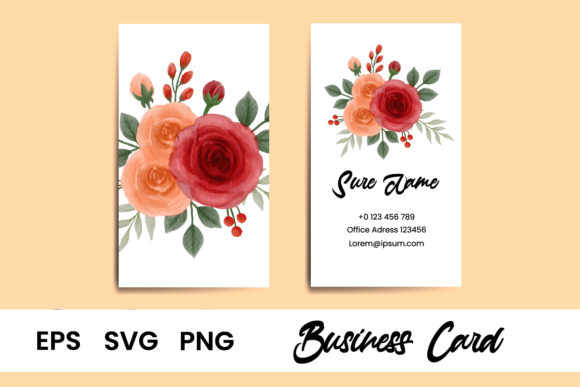
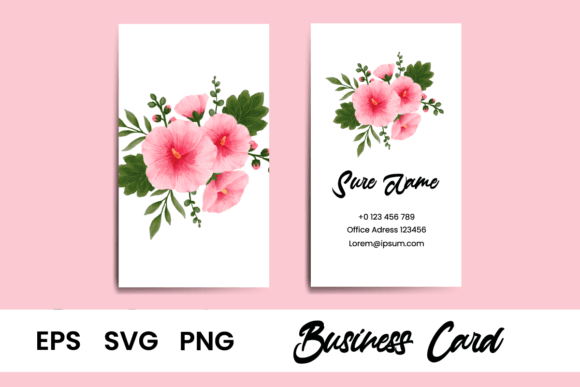
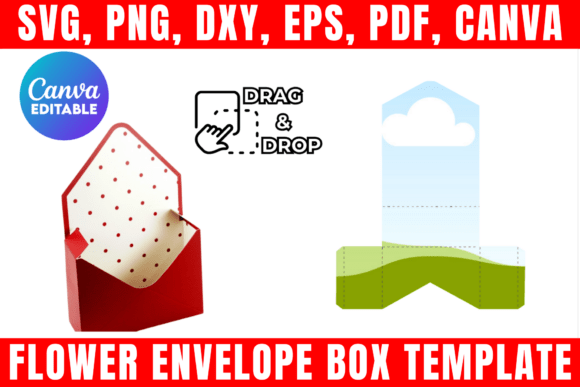
When I opened the Flower Envelope Box Canva Template, my first thought wasn’t “pretty”—it was “intentional.” This isn’t a floral scatter or an all-over motif. It’s a cohesive, self-contained packaging illustration: clean envelope-shaped box with soft botanical flourishes—think trailing stems, subtle buds, and gentle curves—not fussy, not overwhelming. The layout feels like a gift waiting to be held: balanced, centered, and quietly elegant. As an embroidery designer who regularly translates flat graphics into stitched texture, I immediately asked: Where would this live on fabric—and how would it hold up under needle and thread?
Real-World Test: Stitching It onto a Linen Tea Towel for a Local Boutique
Last week, I used the Flower Envelope Box Canva Template as the centerpiece for a limited-run linen tea towel series—part of a spring collection for a neighborhood kitchen boutique. We weren’t printing; we were embroidering. So before committing to 50 units, I ran three real tests: one on midweight linen with standard tear-away stabilizer, one on lightweight cotton poplin (for gift tags), and one scaled down for a 4” hoop on a baby onesie collar.
The result? It translated beautifully to stitch—but only when treated with intention. The envelope shape gave clear, stable edges for satin-stitched borders. The flower details were sparse enough to avoid fill-stitch congestion, yet expressive enough to read clearly at 3–4 inches wide. Customers didn’t just see “a flower.” They saw *care*: the kind that says, “This wasn’t slapped on—it was chosen, sized, and placed.” That nuance matters for handmade product perception.
Where It Shines (and Where It Needs Guardrails)
This template works best where presentation meets purpose:
- Embroidered patches — Its enclosed shape makes it ideal for iron-on or sew-on patches on tote bags, denim jackets, or aprons.
- Personalized gifts — Pair it with monogrammed initials inside the “envelope” space for wedding favors, baby shower towels, or holiday stockings.
- Sweatshirt and tote bag design — Centered on the chest or front panel, it reads cleanly without competing with garment texture.
- Nursery decor and baby embroidery — Soft lines and non-busy composition keep it soothing, not stimulating.
- Etsy listings and printable mockups — As a Graphics asset in the Print Templates category, it layers effortlessly into lifestyle photos—no clipping mask gymnastics needed.
But here’s what I’d flag for fellow designers: this isn’t a one-size-fits-all embroidery file. It needs thoughtful adaptation for:
- Small hoop sizes — Below 4” diameter, some stem details risk becoming indistinct. Trim or simplify before digitizing.
- Textured or stretchy fabric — On terry cloth towels or ribbed knit caps, stabilize generously. The clean lines rely on surface stability.
- Dark fabric — Light-colored thread will pop, but test contrast early. A pale pink stem on navy can vanish without careful thread selection.
- Frequent-wash items — Avoid dense satin-stitch borders on kitchen towels unless you’re using high-retention thread and secure underlay.
What It Adds to Your Finished Product—Beyond Aesthetics
Using the Flower Envelope Box Canva Template doesn’t just decorate—it elevates context. On a custom embroidered sweatshirt for a florist’s staff, it whispered “curated,” not “corporate.” On a set of baby burp cloths, it signaled tenderness without cliché. That’s rare. Most floral embroidery leans either too literal (roses with thorns) or too generic (daisy clusters). This walks the line: decorative but grounded, delicate but deliberate.
For Etsy sellers and craft fair vendors, that distinction builds trust. Buyers scroll past dozens of “cute” designs—this one makes them pause because it feels *designed*, not assembled. And for small shop owners building brand consistency, its structure is flexible: swap out the floral motif for a seasonal icon (a sprig of holly, a tiny pumpkin) while keeping the envelope frame intact. That’s smart design reuse—not just pretty pixels.
Practical Notes Every Embroidery Designer Should Check
Before stitching—or listing your finished product—run through these:
- Test the Flower Envelope Box Canva Template on scrap fabric matching your final substrate. Linen behaves differently than cotton poplin, which behaves differently than fleece.
- Review stitch density manually. Even if it’s labeled “light fill,” zoom in on those petal edges—over-stitching muddies the envelope’s clean silhouette.
- Confirm licensing terms. Since it’s categorized as Graphics and sold as a Canva Box Template, clarify whether commercial use includes selling physical embroidered goods (yes, usually—but verify).
- Check thread color contrast in grayscale mockups. What reads as soft contrast on screen may disappear on dark fabric.
- Use appropriate stabilizer: cutaway for knits, tear-away for stable wovens, and optional topping for napped fabrics like terrycloth.
- Inspect corners and curves at actual stitch-out size. Those gentle arcs need smooth satin transitions—not jagged running-stitch approximations.
Final Thought: A Quietly Confident Design Choice
The Flower Envelope Box Canva Template won’t shout from a crowded craft fair table. It doesn’t need to. Its strength is in restraint, cohesion, and quiet intentionality—qualities that resonate deeply in handmade product storytelling. Whether you’re stitching a single personalized gift or producing 100 boutique merchandise units, this design supports your craftsmanship instead of competing with it. It’s not just a graphic. It’s a thoughtful container—for your skill, your brand, and the care your customers feel when they hold something truly made.